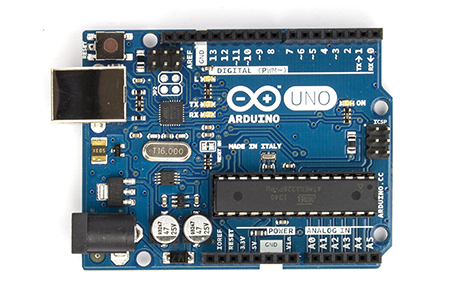
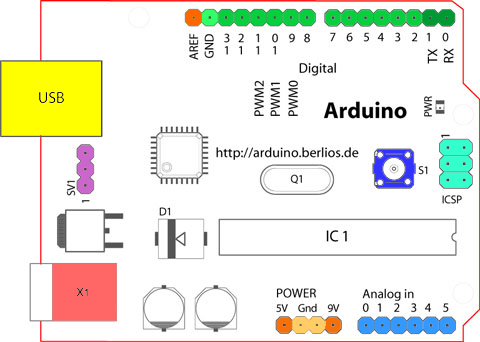
I've had a lot of fun recently building gadgets with my
Arduino and
Maple Mini systems. When I showed a picture of what I built, several people asked "but what can it do"? Good question.
From the perspective of most people using modern computers (desktops, laptops, tablets, smart phones), the lowly Arduino is a toy. You can't browse the Internet on it (at least not very well, maybe in text mode and very slowly). You can't play YouTube or Netflix on it. It does not connect to a VGA or HDMI monitor, nor have a USB port for a keyboard or mouse. While the Maple is a bit faster, it still has the same limitations. What good is Arduino?
People seem to forget what our early computers were like. My first computer had 128 bytes of RAM, a 2K boot EPROM, and 4 MHz processor. Input was via a HEX keypad and display was on 7-segment LEDs. Program storage was to a tape player. The Arduino blows this away. The Maple is no comparison, with a 72 MHz processor, 20K RAM, and 128K flash. Back in those days you HAD to learn something about the hardware do make it do anything useful. Today Arduino is the platform to learn about computing and hardware.
When I started working with embedded systems, most of my software was in assembly and I encoded it by hand, then entered the HEX code directly into the computer. Later, I had an assembler on our VAX mini-computer (1 MIPS, slower than an Arduino, but supporting 50+ users). We also had emulators costing $5000 or more (very unreliable). These allowed us to download our code directly to the system we were testing and debug it. A minimal embedded system was a dozen or so chips and took up many times the space of Arduino today. Today we can get started with an Arduino with a retail cost of $
This is where the fun starts!
But what can you build with Arduino (and Arduino-like systems)? Some people build projects to
learn hardware and software. Arduino is used for
music projects to play music, visualize music, etc. Some hack
toys to add motion, sounds, interactions, etc. There is an entire community using Arduino to build
autopilots for drones. Arduino has been used for biometrics and you can buy an
EKG shield. There are even projects to build
Arduino gaming systems.
Arduino is not just about technology, but also
Art. There are
sites dedicated to Arduino for artists.
It is at the forefront of
wearable computing like the
Adafruit FLORA wearable system.
The Arduino platform is very simple to setup and use. Kids in middle school have used it to create science fair projects. There are many articles about using
Arduino in the classroom. Why not, the cost is low and the performance is high. Kids can learn to write very simple programs and get nearly-immediate feedback on what they wrote. The software is free, open source, and easy to setup and use. All you need is a modern PC/laptop, modern O/S (Win/Mac/Linux), and a USB cable.
Google the Internet for top Arduino projects and you will find articles like
Hacknmod top Arduino projects listing some really cool, pretty, and fun projects.
Today we use Arduino and similar systems nearly anywhere that you would have used a custom microprocessor board 10 or 20 years ago. It is expanding the reach of computing to new areas including artists and hobbyists who would never have used a computer a few years ago. New industries are being created such as the maker communities including companies like
Adafruit and
Spark Fun.
You can get the
Arduino from many source including
Adafruit and
Spark Fun for $10 and up (or less for clones). The development environment is free and available for Windows, Mac, and Linux. Download it
from the Arduino site or install in your favorite operating system (Fedora: yum install arduino, Ubuntu: apt-get install ubuntu).
You can get the
Maple Mini from
SparkFun and clones from various sources on the Internet for as low as $5. Not bad for a 72 MHz computer faster than your Windows 95 desktop a few years back.
Happy Hardware Hacking!